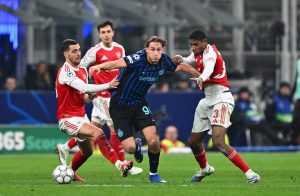

Football fans have become accustomed to demanding major transfers and nine-figure spending sprees. Yet the list of truly successful £100m+ signings is very short. Among the eleven players purchased for more than £100 million, the majority have failed to meet expectations.
Antoine Griezmann’s £105.9m move from Atlético Madrid to Barcelona never lived up to its billing. João Félix, signed for £112.9m to replace him, became another expensive miscalculation. Philippe Coutinho’s £142m switch from Liverpool to Barcelona remains one of the most infamous failed transfers of the modern era, eventually leading to a loan spell at Aston Villa.
Even the most iconic big-money signings—Neymar (£200m) and Kylian Mbappé (£165.7m)—did not deliver the one thing they were signed for: the Champions League. Paris Saint-Germain finally achieved European success only after both superstars had left, sparking debates about whether a more balanced squad mattered more than individual brilliance.
The pattern is clear: nine-figure forwards almost always carry unrealistic expectations and rarely reshape their teams in a sustainable way.
A New Trend: £100m Midfielders Who Actually Deliver
That’s why it was striking to see three players from this exclusive “£100m club” on the pitch at Stamford Bridge last Sunday—each of them currently justifying their enormous transfer fees. Unlike the attacking stars who dominated previous record moves, these three are midfielders redefining the idea of value in modern football:
- Enzo Fernández (£106m, Chelsea)
- Declan Rice (£105m, Arsenal)
- Moisés Caicedo (up to £115m, Chelsea)
These are not luxury attackers. They are intelligent, highly versatile midfielders capable of performing multiple roles and elevating their teams structurally, not just creatively.
Enzo Fernández: From Defensive Anchor to Chelsea’s Creative Engine
Enzo Fernández first burst onto the global stage during the 2022 World Cup. Introduced to stabilise Argentina after the shock defeat to Saudi Arabia, he impressed not only with his passing range but also with his defensive output—no player made more defensive-third tackles in the tournament.
Chelsea, long known for strong midfield structures, seemed like a natural destination.
Interestingly, although he arrived as a deep-lying midfielder, his evolution in London has been more attack-oriented. His goals-per-game average has increased every season, rising from 0.0 to 0.4, while his shots-on-target numbers have also climbed significantly, with average shooting distance dropping from over 24 metres to around 15.5 metres.
His recent goal against Burnley—arriving in the box to finish a cutback—is the perfect snapshot of the “new” Enzo. He has slowly developed into a Lampard-style attacking midfielder rather than a Makelele-type destroyer.
Manager Enzo Maresca highlighted this shift, noting that Fernández has been used as an attacking midfielder in roughly 90% of Chelsea’s matches this season. His versatility is no longer a bonus—it is central to Chelsea’s tactical identity.
Moisés Caicedo: The Hybrid Midfielder Built for Modern Systems
Caicedo arrived from Brighton with a reputation for being a complete midfielder—aggressive in duels, effective in transition, and capable of progressing the ball through pressure. But his skill set also allows him to play an unusual hybrid role: a right-back out of possession and a deep-lying playmaker in possession.
Maresca has leaned heavily into this tactical flexibility. In several matches last season and again in Chelsea’s 5–1 Champions League win over Ajax, Caicedo drifted between roles seamlessly. He even scored in that match while also covering defensively in wide areas.
His tactical intelligence is what Chelsea paid for—not just his physical tools. At 24, he is still developing, and his ceiling appears significantly higher because of his adaptability.
Declan Rice: Arsenal’s Multi-Phase Leader
When Declan Rice was still at West Ham, pundits often debated whether his long-term position should be centre-back or defensive midfielder. Even after signing for Arsenal, early predictions suggested he would become their permanent “number six”.
Instead, Mikel Arteta has discovered that Rice is at his best with more freedom. The arrival of Kai Havertz was expected to anchor Rice in a deeper role, but the opposite has happened. Rice often plays as a left-sided number eight, driving into the final third and arriving late into scoring zones.
His performance in Arsenal’s 4–1 win over Tottenham showcased his multi-phase ability—dropping between centre-backs in buildup, then minutes later bursting past defenders into attacking positions. It’s the blueprint of a modern midfielder who can influence every zone of the pitch.
Arsenal’s recruitment this summer (Martín Zubimendi, Christian Nørgaard) further confirms that Rice is now viewed not as a pure defensive midfielder but as a dynamic all-purpose engine.
Why £100m Midfielders Are Becoming the Smartest Investments
Just a few seasons ago, the roles of “defensive midfielder” and “attacking midfielder” were clearly separated. But football has shifted back toward the box-to-box profile—players who can press, progress, protect, and create within the same match.
This is exactly why Rice, Caicedo and Fernández stand out among £100m transfers. Unlike forwards who must deliver goals to justify the price, versatile midfielders impact every phase of play. They give managers tactical freedom and help solve squad-building problems instead of creating new ones.
Yes, these midfielders still need time and more trophies before they can be declared fully successful signings. But based on current performances, they are already closer to fulfilling their massive price tags than many of their £100m predecessors.
Stay updated with the latest transfer analysis, Champions League insights, and Premier League storylines for the 2025/26 season. Explore more expert breakdowns, match updates, and tactical reports in our football news section.