Real Madrid have not started the season poorly in terms of results, but something far more important has been lost — stability. The team continues to win matches, yet control, consistency and dominance no longer feel guaranteed. One moment, however, exposed the underlying problems more clearly than any other: the heavy defeat against Paris Saint-Germain in the Club World Cup (0-4).
That match did not create the crisis — it revealed it.
The Ancelotti Era: Freedom, Experience and Controlled Chaos
Under Carlo Ancelotti, Real Madrid operated on a simple but highly effective principle: maximum freedom for its leaders. Senior players were trusted to make decisions on the pitch, while tactical constraints were often minimal.
This approach worked, especially in the Champions League. Real Madrid frequently won matches despite being outplayed statistically, relying on late goals, individual brilliance and emotional momentum. The “magic” of European nights at the Bernabéu became a defining feature of the team’s identity.
However, such a model is not sustainable forever. It depends heavily on form, confidence and a degree of luck — and eventually, that balance breaks.
Arsenal: The End of the Illusion
The moment that truly ended this era came in last season’s Champions League quarter-finals. Arsenal dismantled Real Madrid with a 5–1 aggregate victory, exposing the limits of Madrid’s reliance on freedom and individual quality.
Arsenal did not win through moments of magic. They won through structure, intensity and collective discipline — a system designed to dominate every phase of the game. That tie was more than an elimination; it was a warning that modern elite football no longer rewards chaos.
Xabi Alonso and the Shift Toward Structure
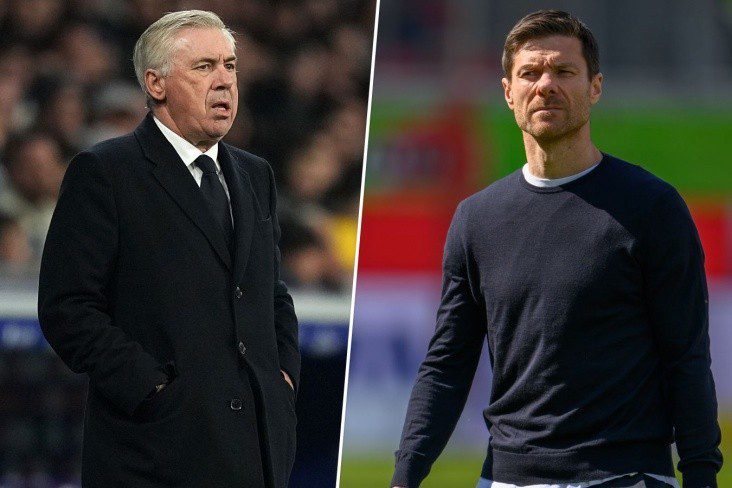
Xabi Alonso’s arrival marks a clear philosophical shift. Unlike Ancelotti, Alonso prioritises structure, positional discipline and spatial control. His vision is to transform Real Madrid into a team that dominates through organisation rather than improvisation.
But transitions of this magnitude are rarely smooth.
Players accustomed to freedom must adapt to strict roles, coordinated pressing and tactical responsibility. Old habits clash with new demands, creating tension both on and off the pitch.
Vinícius Jr.: A Symbol of Internal Conflict
Vinícius Jr.’s situation has become a reflection of Real Madrid’s broader transition. Contract negotiations remain unresolved, with the Brazilian demanding a salary that reflects top-tier star status, while the club hesitates to reshape its wage hierarchy.
At the same time, his influence on the pitch has changed. His substitution during El Clásico — followed by visible frustration — symbolised the difficulty of adjusting from freedom to structure under Alonso’s system.
Mbappé and the New Hierarchy
Kylian Mbappé’s presence has further accelerated this shift. The French forward scores goals, assumes responsibility and delivers consistently in decisive moments. Naturally, he has become the focal point of the project.
For the first time in years, Vinícius is no longer the undisputed face of Real Madrid. The transition of leadership from one star to another has altered the emotional balance within the squad — and adapting to that change takes time.
A Team Between Two Eras
Real Madrid are not in decline. They are in transition. The squad remains packed with world-class talent, but cohesion and clarity are still developing.
Until Alonso fully establishes his structure and the players commit to it, inconsistency will remain part of the process. The challenge is not technical — it is psychological.
The Manchester City Lesson
The recent match against Manchester City perfectly illustrated the direction modern football has taken. Victory no longer belongs to teams that rely on luck or isolated moments of brilliance, but to those built on collective intelligence and tactical discipline.
City won through structure, coordinated pressing and total spatial control. Every player operated as part of a system, not as an individual seeking solutions alone.
For Real Madrid, it was a clear message. The era of surviving on magic is over. To compete consistently with Europe’s most organised teams, Madrid must fully embrace the transition from freedom to structure — exactly the process Xabi Alonso is trying to complete.