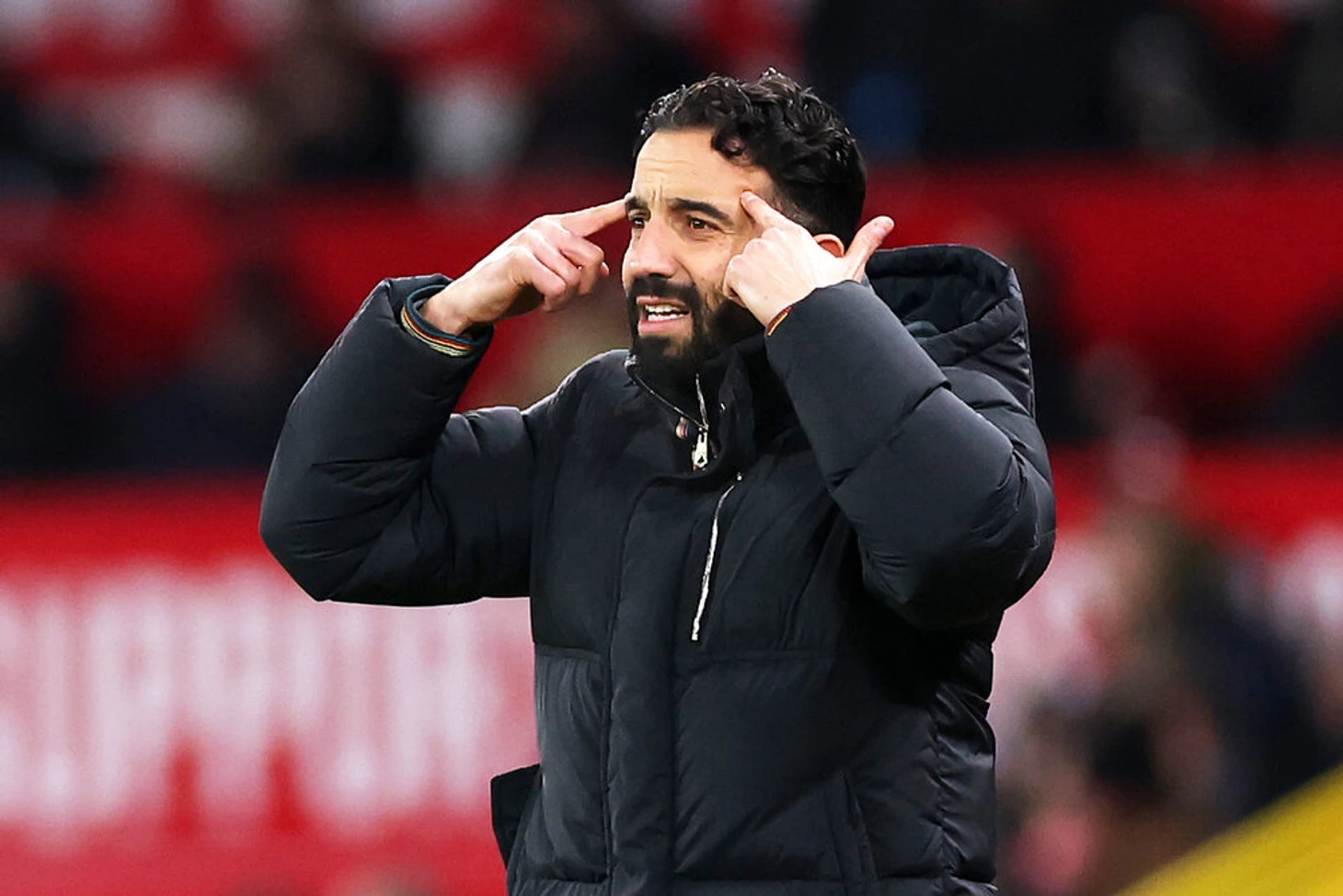
Manchester United have officially dismissed head coach Ruben Amorim, ending a turbulent chapter marked by tactical disagreements, transfer frustration, and a growing power struggle behind the scenes. While United are absent from the Champions League, the fallout from Amorim’s exit is one of the most significant stories in European football this season.
A Decision Made Behind Closed Doors
Manchester United confirmed Ruben Amorim’s dismissal following a tense period that culminated in a public standoff after the 1–1 draw with Leeds United. According to multiple reliable reports, including David Ornstein, the final decision was communicated to Amorim on Monday morning by sporting director Jason Wilcox and chief executive Omar Berrada. The choice was supported at ownership level and reflected a deep loss of confidence in the working relationship.
Despite inconsistent results, the timing of the dismissal surprised many. United won just three of their last eleven matches, yet insiders suggest the outcome was sealed before the Leeds game even kicked off. The club have opted not to appoint a permanent successor mid-season, instead placing Darren Fletcher in charge on an interim basis while planning for a long-term appointment in the summer.
Power Struggles and the “Manager vs Head Coach” Debate
One of the core issues in Amorim’s tenure was a fundamental disagreement over authority. Amorim believed he was hired as a “manager” with broad control, while the club always viewed his role as head coach. Notably, United’s official communications consistently referred to him as head coach, a deliberate distinction that underlined the limits of his influence.
This contrast became increasingly visible in press conferences. Amorim publicly demanded more control over football decisions, arguing that other departments needed to “do their jobs” while he did his. English media interpreted these remarks as an ultimatum to the board. United responded decisively, choosing institutional structure over individual authority.
Transfer Frustration and Broken Promises
Transfers became a major source of tension. During the summer, Amorim requested experienced, proven players to fit his system, including a traditional goalscoring striker. Instead, the club prioritized younger profiles aligned with long-term planning. This divergence deepened in January, when United failed to reinforce the squad despite injuries to key players and multiple absences due to international duty.
Amorim reportedly expected funds earmarked for a failed transfer pursuit to be reallocated elsewhere, but that never happened. From the club’s perspective, INEOS maintained a strict policy against panic buys, insisting that only long-term targets justified winter spending. Amorim, however, felt assurances about January reinforcements had not been honored, eroding trust further.
Tactical Rigidity and the 3-4-3 Standoff
Tactical inflexibility proved to be another breaking point. Amorim’s commitment to a 3-4-3 system increasingly frustrated club executives, who wanted greater adaptability based on opposition and squad availability. Internally, analysts highlighted vulnerabilities in midfield balance, particularly when opponents overloaded central areas.
While Amorim briefly experimented with a back four in December, he repeatedly reverted to his preferred system under pressure. According to reports, United’s leadership interpreted this as resistance rather than conviction. The issue was not the formation itself, but Amorim’s reluctance to adjust, even when results and player confidence suffered.
Dressing Room Confusion and Eroding Authority
The situation worsened as tactical uncertainty spilled into the dressing room. In one notable instance, players prepared for a match expecting a four-man defense, only to be informed shortly before kickoff that the system had changed again. Sources described confusion and declining confidence in Amorim’s decision-making, particularly in the absence of senior leaders like Bruno Fernandes.
From the club’s viewpoint, Amorim had been given clarity, time, and support, but failed to stabilize performance or establish a consistent identity. By December, executives concluded that the project had stalled rather than progressed.
Amorim’s Perspective: Belief in a Champions League Finish
Despite the mounting pressure, Amorim did not want to leave Manchester United. People close to him told Sky Sports that the dismissal was deeply painful, as he believed the team could still finish in the Champions League places. He acknowledged poor results but felt constrained by excessive oversight and limited tactical autonomy.
Amorim also believed that greater investment would have paid off both competitively and financially. The club disagreed, viewing short-term risk as incompatible with their long-term restructuring strategy. Ultimately, the gap between vision and execution became unbridgeable.
Financial Cost and a Strategic Reset
United’s decision comes at a significant financial cost. Terminating Amorim’s contract early, combined with compensation paid to his former club and associated expenses, is estimated to total between £25–30 million. Yet the club appears willing to absorb that loss in pursuit of structural clarity.
Darren Fletcher has assumed interim control, with expectations that he will revert to a more conventional 4-2-3-1 or 4-3-3 system. Internally, there is confidence that the squad is capable of better results under a simplified tactical framework.
The Search for a New Permanent Coach
Attention has already turned to potential long-term replacements. Oliver Glasner, Roberto De Zerbi, Andoni Iraola, and Enzo Maresca are all reportedly admired, while familiar names such as Kieran McKenna, Ole Gunnar Solskjær, and even Gareth Southgate have surfaced in speculation.
What is clear is that the next appointment will carry the title of head coach only. United’s leadership has ended the era of managerial veto power over transfers, committing fully to a collaborative, data-driven structure. Recruitment chief Christopher Vivell is expected to play a central role in shaping both the next coaching appointment and the squad’s evolution.
Why This Matters for European Football
Manchester United’s turmoil extends beyond domestic concerns. One of Europe’s biggest clubs is redefining how power, recruitment, and coaching interact in the modern game. The outcome of this reset will influence not only United’s return to the Champions League but also how elite clubs balance authority and structure across Europe.
For more Champions League news tailored for Indonesia, read the latest updates here. To follow the most recent results, standings, and European football context, you can check them here.